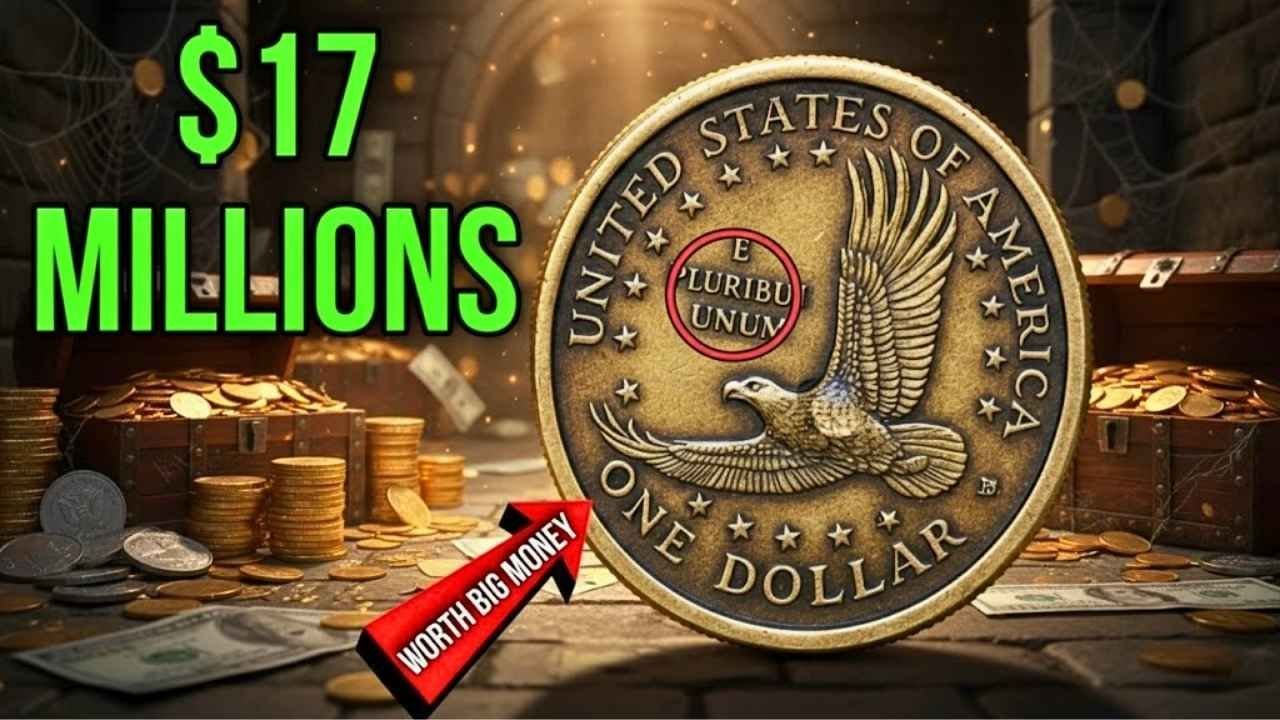
The Sacagawea Dollar, first introduced in 2000, represents a modern milestone in U.S. coinage. Honoring Sacagawea, the Shoshone woman who guided the Lewis and Clark expedition, this coin combines historical significance with a distinctive golden appearance. While most circulate at face value, certain rare varieties and error coins have become highly valuable, attracting collectors eager to acquire these elusive treasures in 2026.
Origins of the Sacagawea Dollar
The Sacagawea Dollar was designed to replace the Susan B. Anthony Dollar and promote the use of dollar coins in daily transactions. Sculpted by Glenna Goodacre, the obverse features Sacagawea carrying her infant son, Jean Baptiste, reflecting strength and resilience. The reverse, designed by Thomas D. Rogers, depicts a soaring eagle surrounded by 17 stars, symbolizing the nation’s unity. Its unique manganese-brass alloy gave it a golden hue, setting it apart from previous silver and copper-nickel dollars.
Composition and Design Details
Understanding the specifications of the Sacagawea Dollar is essential for identifying rare coins:
- Composition: Copper core clad with manganese brass (77% copper, 12% zinc, 7% manganese, 4% nickel)
- Weight: 8.1 grams
- Diameter: 26.5 mm
- Obverse: Sacagawea with her infant son
- Reverse: Soaring eagle with 17 stars
- Mint Marks: Philadelphia (P), Denver (D), San Francisco (S)
These details help collectors distinguish genuine coins from counterfeits and identify special varieties.
Rare Sacagawea Dollar Varieties
Some Sacagawea Dollars have achieved legendary status among collectors due to rarity, unique errors, or special releases. The most notable examples include:
| Variety | Notable Feature | Estimated Value (2026) |
|---|---|---|
| 2000-P Cheerios Dollar | Prototype reverse with detailed eagle tail feathers | $5,000–$25,000 |
| 2000-P Mule Error | Sacagawea obverse paired with Washington Quarter reverse | $50,000–$200,000 |
| 2000-P Goodacre Presentation | Special strike presentation coins for the designer | $200–$1,000 |
| 2000-P Off-Center Strike | Misaligned design error | $100–$1,500 |
| 2000-P Proof Error | Struck on wrong planchet | $1,000–$10,000 |
The Cheerios Dollar

The Cheerios Dollar is one of the most famous Sacagawea Dollar varieties. As part of a 2000 General Mills promotion, some coins were distributed in cereal boxes. Certain issues featured a prototype reverse with enhanced tail feathers on the eagle, making them extremely rare and highly sought after, with values reaching tens of thousands of dollars.
The Mule Error
Perhaps the most extraordinary Sacagawea Dollar rarity is the mule error. In this minting mistake, a Sacagawea obverse was paired with a Washington Quarter reverse, creating a coin with mismatched designs. These coins are exceptionally scarce and can command prices in the tens of thousands, and in some cases, even over $100,000 at auction.
Goodacre Presentation Coins
Artist Glenna Goodacre received 5,000 specially struck coins as a presentation set. These coins have a unique finish and are highly collectible. Depending on condition, values range from a few hundred to over a thousand dollars. Presentation coins are prized for both their artistry and scarcity.
Other Error Varieties
Collectors also seek out off-center strikes, proof errors, and coins struck on the wrong planchet. Such errors are rare and add uniqueness, increasing their desirability and value in 2026.
Market Trends in 2026
The Sacagawea Dollar market remains robust. Rare varieties and error coins continue to attract significant attention at auctions, with record prices reported for mule errors and Cheerios Dollars. Online trading platforms have broadened access to collectors worldwide, increasing competition for high-grade specimens. Certified coins with minimal wear and preserved luster consistently achieve strong demand, making condition a critical factor in value.
Tips for Collectors and Investors
- Identify rare varieties: Focus on mule errors, Cheerios Dollars, and special presentation coins.
- Preserve condition: Use protective holders to maintain sharp details and luster.
- Verify authenticity: Professional grading services such as PCGS or NGC are essential for confirming rarity and grade.
- Monitor the market: Track auctions and online sales to stay informed about trends and emerging values.
- Complete collections thoughtfully: Building sets by year and mint mark enhances historical and financial value.
Historical Significance
The Sacagawea Dollar is more than a coin; it is a tribute to a pivotal figure in American history. Its design celebrates the contributions of Sacagawea and embodies progress and innovation in U.S. coinage. Rare varieties remind collectors that even modern coins can achieve extraordinary value when scarcity and historical relevance intersect.
Key Highlights
- Introduced in 2000 to honor Sacagawea and replace the Susan B. Anthony Dollar
- Rare varieties include the Cheerios Dollar, mule errors, and Goodacre Presentation coins
- Error coins can be worth hundreds, thousands, or even tens of thousands of dollars
- Collector demand in 2026 remains strong, with auction houses reporting record sales
- The coin represents history, artistry, and investment potential
Final Thoughts
The Sacagawea Dollar stands as one of America’s most intriguing modern coins. In 2026, collectors can explore a wide range of issues—from standard circulation strikes to rare error coins and special presentations. Whether building a complete set or seeking a standout piece, owning a Sacagawea Dollar is not only an investment in value but also a tangible connection to American history and heritage, making it a cherished addition to any numismatic collection.