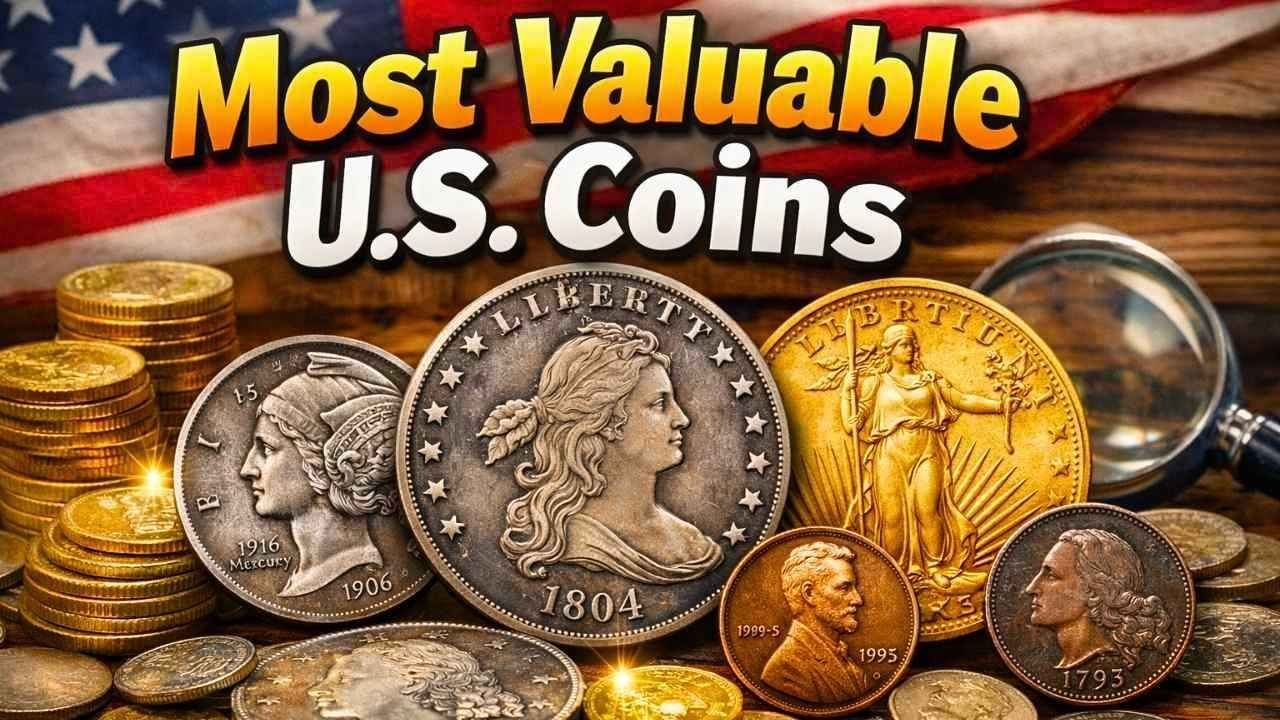
The history of U.S. coinage is a fascinating blend of artistry, scarcity, and financial intrigue. While most coins remain worth only their face value, a select few have become legendary, commanding prices that can reach millions. In 2026, collectors continue to seek out these rare treasures, each representing a unique chapter in America’s numismatic heritage. This guide explores the most valuable U.S. coins, their defining features, and the reasons behind their enduring appeal.
Why Rare Coins Captivate Collectors
Rare coins appeal to collectors for several compelling reasons. Some are prized for their historical significance, others for unique minting errors, and many simply for their scarcity. Coins preserved in pristine condition—graded highly by professional services—often fetch the highest prices. For enthusiasts, owning such a piece is more than a financial investment; it is a tangible connection to American history and craftsmanship.
Understanding U.S. Coins: Composition and Design
Over the centuries, U.S. coins have been struck in copper, silver, gold, and various alloys. Their designs celebrate national identity, featuring presidents, symbols of liberty, and historic events. Rare coins stand out due to distinctive characteristics such as unusual mint marks, experimental strikes, or limited production runs. These unique features can transform an otherwise ordinary coin into a highly sought-after collector’s item.
Top 10 Most Valuable U.S. Coins in 2026
| Coin | Notable Feature | Estimated Value (2026) |
|---|---|---|
| 1794 Flowing Hair Silver Dollar | First U.S. silver dollar | $10,000,000+ |
| 1933 Double Eagle | Gold coin, never circulated | $18,000,000+ |
| 1913 Liberty Head Nickel | Extremely rare issue | $5,000,000+ |
| 1804 Draped Bust Silver Dollar | Nicknamed “King of American Coins” | $7,000,000+ |
| 1943 Copper Penny | Struck on wrong planchet | $1,000,000+ |
| 1944 Steel Penny | Wartime rarity | $1,000,000+ |
| 1870-S Seated Liberty Dollar | Rare San Francisco mint issue | $2,000,000+ |
| 2000-P Sacagawea Mule Error | Double denomination error | $500,000+ |
| 1955 Doubled Die Lincoln Cent | Famous doubling on obverse | $1,000,000+ |
| 1787 Brasher Doubloon | Early American gold coin | $9,000,000+ |
Legendary Coins and Their Stories
Among these coins, the 1794 Flowing Hair Silver Dollar stands out as the first silver dollar minted by the United States, combining rarity with immense historical significance. The 1933 Double Eagle, a gold coin that never entered circulation, has become an icon of numismatic intrigue, with one specimen fetching over $18 million. The 1913 Liberty Head Nickel, with only five known examples, remains one of the most elusive coins for collectors, while the 1804 Draped Bust Silver Dollar has earned its moniker as the “King of American Coins.”
Iconic Error Coins
Error coins offer another dimension of rarity. The 1943 Copper Penny, accidentally struck on a copper planchet instead of steel, has sold for over $1 million. The 1944 Steel Penny, a wartime anomaly, commands similar prestige. Modern errors, such as the 2000-P Sacagawea Mule Error, demonstrate that even contemporary mistakes can produce remarkable collector value. The 1955 Doubled Die Lincoln Cent, with its dramatic doubling on the obverse, remains a highly recognizable and desirable error.
The Role of Condition

Condition plays a critical role in determining coin value. Coins graded MS65 or higher by professional services can attract significant premiums. Collectors seek sharp details, full luster, and minimal surface marks. Even coins that are otherwise common can become valuable if preserved impeccably, making proper storage and handling essential for serious collectors.
Market Trends in 2026
The rare coin market continues to thrive in 2026. Auction houses report record sales for historic coins, while online marketplaces have expanded access for collectors worldwide. Certified coins in high grades remain particularly sought-after, and variety coins are increasingly popular among advanced collectors. Awareness of market trends and auction results is essential for anyone looking to buy or sell rare coins today.
Collecting Tips for Enthusiasts
- Recognize key rarities like the 1794 Flowing Hair Dollar and 1933 Double Eagle.
- Preserve coins in protective holders to prevent damage.
- Verify authenticity through professional grading services.
- Prioritize condition, as higher grades significantly increase value.
- Stay updated on auction results and market trends for informed collecting.
Historical Legacy of U.S. Coins
Rare U.S. coins are more than collectibles—they are artifacts of American history. From early gold issues like the Brasher Doubloon to modern errors such as the Sacagawea Mule, each coin tells a story of economic, political, and cultural evolution. Collectors value these coins not only for their monetary worth but also for their ability to connect present-day enthusiasts with the nation’s rich numismatic past.
Key Takeaways
- The most valuable U.S. coins include the 1794 Flowing Hair Dollar, 1933 Double Eagle, and 1913 Liberty Head Nickel.
- Error coins such as the 1943 Copper Penny and 1955 Doubled Die Cent have achieved values exceeding $1 million.
- Condition is critical; MS65+ coins command premium prices.
- Collector demand remains robust, with auction prices reaching record highs.
- Rare coins embody historical significance, offering a legacy that extends beyond financial value.
In 2026, the pursuit of rare U.S. coins continues to be a journey through history, art, and legacy. Whether discovering a legendary silver dollar or a famous error penny, collectors gain not just a financial asset but a tangible link to the story of America itself. For serious enthusiasts, these coins represent enduring treasures, worthy of preservation for generations.