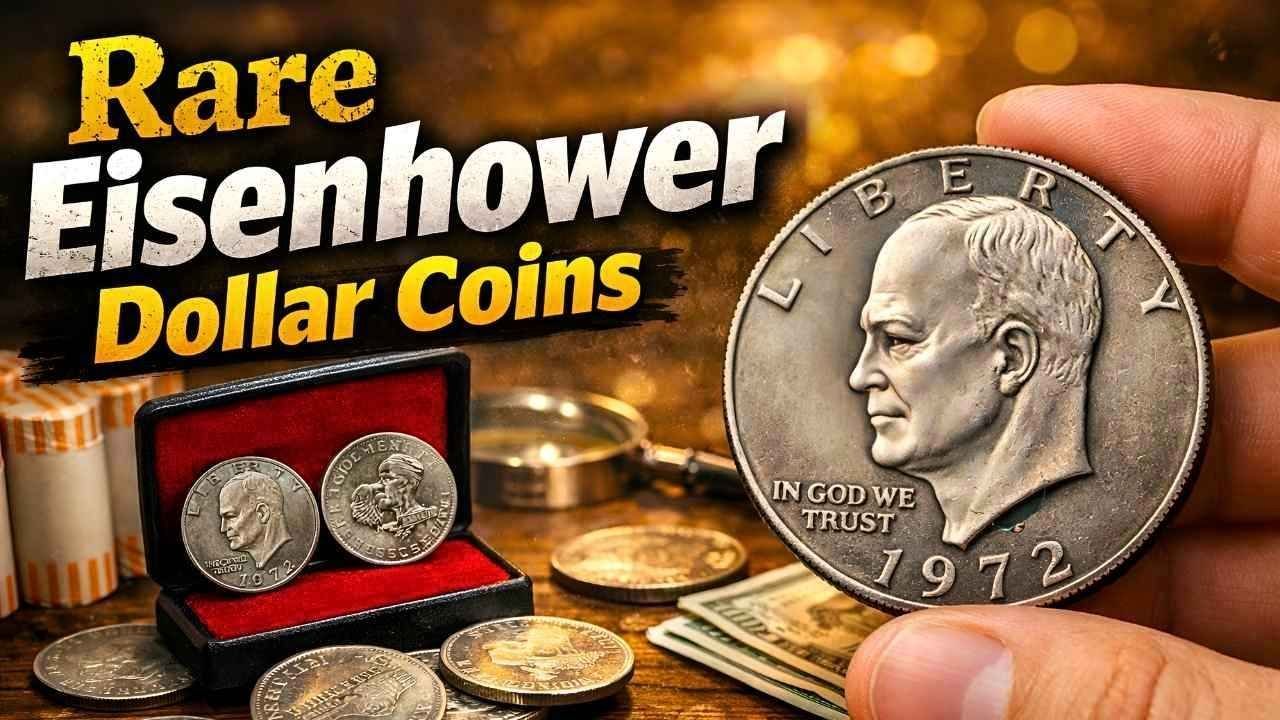
The Eisenhower Dollar, minted from 1971 to 1978, represents the final chapter of large‑sized U.S. dollar coins. Named in honor of President Dwight D. Eisenhower and commemorating the historic Apollo 11 moon landing, this coin blends presidential tribute with space-age celebration. While most Eisenhower Dollars remain common and trade at face value, certain varieties and collector editions have become prized assets, fetching hundreds or even thousands of dollars. In 2026, these coins continue to captivate collectors who appreciate both design and historical significance.
Origins and Historical Significance
The Eisenhower Dollar was introduced to honor a pivotal American president and commemorate one of the nation’s most iconic achievements: the Apollo 11 mission. Designed by Frank Gasparro, the obverse features Eisenhower’s dignified portrait, while the reverse showcases an eagle landing on the moon with Earth visible in the background, echoing the Apollo 11 mission insignia. This dual celebration of leadership and innovation gives the Eisenhower Dollar a distinct place in modern U.S. numismatics.
Composition and Design Details
Eisenhower Dollars were issued in two primary compositions:
- Circulation strikes: Copper‑nickel clad, intended for everyday use
- Collector strikes: 40% silver clad, produced for proof and uncirculated sets
Mint marks indicate their origin: Philadelphia (no mint mark), Denver (D), and San Francisco (S). The combination of large size, bold design, and diverse minting options contributes to the coin’s collectible appeal.
Key Design Elements
- Obverse: Portrait of President Dwight D. Eisenhower
- Reverse: Eagle landing on the moon, Earth in the background
- Designer: Frank Gasparro
- Metal: Copper‑nickel clad (circulation), 40% silver (collector issues)
Chart of Rare Eisenhower Dollar Varieties
| Year | Variety | Notable Feature | Estimated Value (2026) |
|---|---|---|---|
| 1971-S Proof Silver | First-year issue | $20–$150 | |
| 1972 Type 2 | Scarce reverse design | $200–$1,500 | |
| 1973-S Proof Silver | Collector edition | $25–$200 | |
| 1976 Bicentennial Silver Proof | Special anniversary issue | $20–$250 | |
| 1976 Type 1 & Type 2 | Different lettering styles | $50–$500 | |
| 1978-S Proof | Final year issue | $15–$100 |
The Most Valuable Eisenhower Dollars
Among collectors, the 1972 Type 2 variety stands out for its distinctive reverse design, which depicts Earth with a slightly different engraving compared to the Type 1. Bicentennial issues from 1976 also hold strong collector value, particularly silver proofs and varieties featuring unique lettering. San Francisco Mint proof coins are consistently sought-after, with higher grades commanding premium prices at auctions.
Error Coins and Special Strikes

While not as prominent as older historic coins, Eisenhower Dollars include varieties that command attention. Minor die variations, proof-only issues, and unique minting errors can elevate a coin’s value. Collectors often focus on coins that combine rarity, impeccable condition, and aesthetic appeal.
Condition: The Key to Value
As with all collectibles, condition is critical. Coins graded MS65 or higher by professional grading services achieve significant premiums. Collectors prioritize sharp details, full luster, and minimal surface blemishes. Even circulation strikes can become valuable if preserved in top condition, making proper storage in protective holders essential.
Market Trends in 2026
The Eisenhower Dollar market remains steady, with demand concentrated on silver proofs and rare varieties. Auction houses report consistent sales for high-grade coins, and online platforms have broadened access to collectors worldwide. While most circulation coins are inexpensive, rare varieties offer strong potential for both investment and enjoyment. Certified coins continue to set record prices, highlighting the enduring interest in this iconic series.
Collector Tips for Enthusiasts
- Focus on distinguishing reverse types, particularly 1972 Type 1 vs. Type 2
- Prioritize silver proofs from the San Francisco Mint
- Store coins in protective holders to prevent wear and oxidation
- Verify authenticity through professional grading services
- Aim to build a complete set by year and mint mark for a comprehensive collection
Legacy and Cultural Significance
The Eisenhower Dollar represents more than currency; it is a symbol of presidential legacy and American ingenuity. Its large size and bold design make it a standout among modern coins, while its connection to the Apollo 11 moon landing adds a layer of historical resonance. Collectors value these coins not just for rarity but for the stories they embody—an era of leadership, space exploration, and national pride.
Key Highlights
- Minted from 1971 to 1978, Eisenhower Dollars mark the last large-sized U.S. dollar coins
- Rare varieties include the 1972 Type 2 and 1976 Bicentennial issues
- Silver proofs, especially from the San Francisco Mint, carry strong collector premiums
- Condition and grading significantly impact market value
- In 2026, collector demand remains robust, with auctions and online sales continuing to set record prices
Final Thoughts
The Eisenhower Dollar remains one of America’s most distinctive modern coins. In 2026, collectors can explore a spectrum of coins—from affordable circulation strikes to high-value proofs and rare varieties. Whether building a complete set or acquiring a single standout piece, the Eisenhower Dollar offers a journey through 1970s American history and a tangible connection to both presidential and space-age milestones. For enthusiasts, owning these coins is not only an investment but a chance to preserve a piece of cultural and historical heritage.