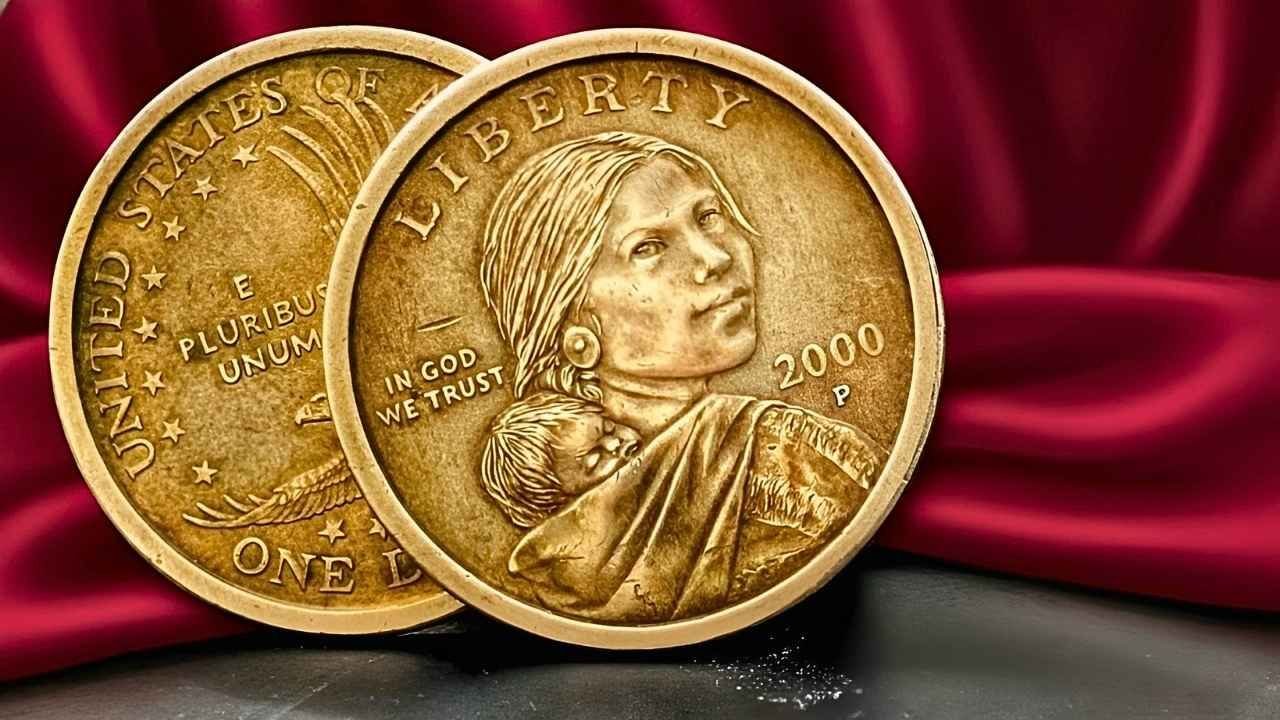
The Sacagawea Dollar, first minted in 2000, remains one of the most celebrated modern U.S. coins. Designed to honor Sacagawea, the Shoshone woman who guided the Lewis and Clark expedition, this coin combines historical significance, innovative design, and a striking golden hue. While most Sacagawea Dollars circulate at face value, certain rare varieties and minting errors have transformed ordinary coins into highly coveted collectibles. In 2026, some 2000-P Sacagawea Dollars command prices in the tens of thousands, with extraordinary examples reaching into the millions.
Origins of the Sacagawea Dollar
The Sacagawea Dollar was introduced to replace the Susan B. Anthony Dollar, aiming to boost public interest in dollar coins. Sculptor Glenna Goodacre crafted the obverse, featuring Sacagawea carrying her infant son, Jean Baptiste, a symbol of guidance and legacy. The reverse, designed by Thomas D. Rogers, portrays a soaring eagle encircled by 17 stars, representing the states in the Union at the time of the Lewis and Clark expedition.
Its distinct golden color, produced by a manganese-brass alloy, made the coin immediately recognizable and differentiated it from previous silver and clad dollar coins.
Composition and Design
- Composition: Copper core clad with manganese brass (77% copper, 12% zinc, 7% manganese, 4% nickel)
- Weight: 8.1 grams
- Diameter: 26.5 mm
- Obverse: Sacagawea with her infant son, Jean Baptiste
- Reverse: Soaring eagle with 17 stars
- Mint Marks: Philadelphia (P), Denver (D), San Francisco (S)
The combination of artistic design and modern alloy makes the Sacagawea Dollar both visually striking and durable, appealing to collectors and casual users alike.
Rare 2000-P Sacagawea Dollar Varieties
Certain 2000-P Sacagawea Dollars have achieved legendary status in the numismatic community. These rare coins are prized for their limited mintage, unique minting characteristics, and historical context.
| Variety | Notable Feature | Estimated Value (2026) |
|---|---|---|
| 2000-P Cheerios Dollar | Prototype reverse with detailed eagle tail feathers | $5,000–$25,000 |
| 2000-P Mule Error | Sacagawea obverse paired with Washington Quarter reverse | $50,000–$200,000+ |
| 2000-P Goodacre Presentation | Special strike presentation coins given to the designer | $200–$1,000 |
| 2000-P Off-Center Strike | Misaligned design error | $100–$1,500 |
| 2000-P Proof Error | Struck on wrong planchet | $1,000–$10,000 |
The Cheerios Dollar

As part of a 2000 promotional campaign, General Mills distributed Sacagawea Dollars in Cheerios cereal boxes. Some of these coins featured a prototype reverse with enhanced eagle tail feathers. Today, these Cheerios Dollars are among the most sought-after modern U.S. coins, fetching tens of thousands at auctions depending on condition.
The Mule Error
The mule error stands as one of the most extraordinary mistakes in U.S. mint history. In this rare case, a Sacagawea Dollar obverse was paired with a Washington Quarter reverse, creating a mismatched coin. Extremely scarce, these mule errors can sell for hundreds of thousands of dollars, with verified specimens becoming centerpiece highlights for serious collectors.
Goodacre Presentation Coins
Sculptor Glenna Goodacre received 5,000 specially struck presentation coins as part of her compensation. These coins, featuring a distinctive finish, are highly collectible. In 2026, they continue to command strong demand among collectors, with values ranging from several hundred to over a thousand dollars depending on condition.
Other Error Varieties
Collectors also pursue off-center strikes, proof errors, and coins struck on wrong planchets. These anomalies, though less publicized, contribute to the diversity and allure of the Sacagawea Dollar series, offering opportunities for both new and seasoned collectors to discover valuable pieces.
Market Trends in 2026
The market for Sacagawea Dollars remains robust in 2026. Auction houses report record prices for mule errors and Cheerios Dollars, while Goodacre Presentation coins continue to attract steady interest. Online marketplaces have increased accessibility for collectors globally, and certified coins in high grades remain highly desirable. Investors and numismatists alike are drawn to the combination of historical significance, rarity, and aesthetic appeal.
Collector Tips
- Identify Rare Varieties: Learn to spot mule errors, Cheerios Dollars, and proof anomalies.
- Preserve Condition: Store coins in protective holders to maintain their grade.
- Verify Authenticity: Professional grading services help ensure legitimacy and optimize value.
- Focus on High Grades: Coins in top condition consistently achieve premium prices.
- Monitor Auctions: Keep track of sales trends to understand market demand and valuations.
Historical Significance
The Sacagawea Dollar represents more than a monetary instrument; it is a tribute to a remarkable woman and a symbol of exploration, resilience, and cultural recognition. Its design, rare varieties, and modern alloy composition demonstrate the U.S. Mint’s innovation and respect for historical figures. Collectors value these coins not only for financial potential but for the narrative they carry about America’s heritage and artistic craftsmanship.
Key Highlights
- Introduced in 2000 to replace the Susan B. Anthony Dollar
- Rare varieties include Cheerios Dollar, mule errors, and Goodacre Presentation coins
- Error coins can range from hundreds to hundreds of thousands of dollars
- Collector demand remains strong, with auctions setting record prices
- Symbolizes artistry, history, and investment potential
Final Thoughts
The 2000-P Sacagawea Dollar is a cornerstone of modern U.S. coin collecting, combining historical tribute, artistry, and numismatic intrigue. From accessible circulation strikes to rare errors worth tens or even hundreds of thousands, this series offers collectors a unique window into contemporary American coinage. In 2026, the pursuit of Sacagawea Dollars continues to inspire collectors worldwide, providing both a tangible connection to history and a valuable addition to any numismatic portfolio.