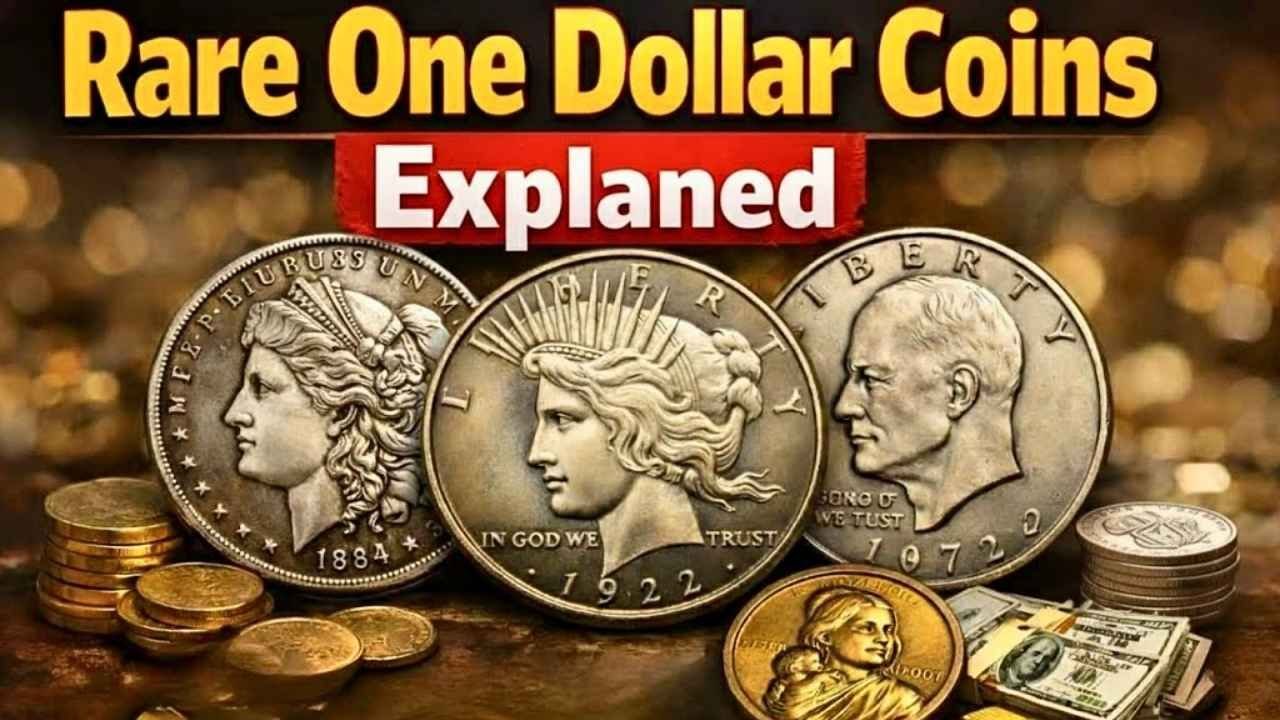
One dollar coins often go unnoticed in everyday transactions, yet some hold extraordinary value for collectors. In 2026, rare one dollar coins continue to attract strong interest, with certain varieties fetching thousands—and in some cases, millions—of dollars at auctions and private sales. Understanding which coins are valuable, their history, and how to identify them is essential for enthusiasts and investors alike.
The Origins of the One Dollar Coin
The journey of the U.S. one dollar coin begins in 1794 with the Flowing Hair design, marking the first silver dollar issued by the United States. Over the centuries, the coin evolved through iconic designs such as the Draped Bust, Seated Liberty, Morgan, and Peace Dollars. Modern iterations include the Eisenhower Dollar, Susan B. Anthony Dollar, Sacagawea Dollar, and the Presidential Dollar series. Each era has produced rare varieties highly prized by collectors, combining historical significance with monetary value.
Composition and Design Through the Ages
Understanding a coin’s composition is crucial for identification:
- Early Silver Dollars (1794–1935): Primarily silver, heavier and larger in diameter.
- Eisenhower Dollar (1971–1978): Copper-nickel clad for circulation, with special silver proofs for collectors.
- Susan B. Anthony Dollar (1979–1981, 1999): Copper-nickel clad, smaller than traditional silver dollars.
- Sacagawea Dollar (2000 onward): Manganese-brass clad, recognized for its golden hue.
- Presidential Dollar Series (2007–2016): Golden-colored with a copper core, often featuring edge lettering and portraits of U.S. Presidents.
Diameter and weight vary depending on composition, with early silver dollars measuring 38.1 mm and modern issues around 26.5 mm.
Top Rare One Dollar Coins and Their Values in 2026
| Coin | Notable Feature | Estimated Value (2026) |
|---|---|---|
| 1794 Flowing Hair Dollar | First U.S. silver dollar | $500,000–$1,000,000+ |
| 1804 Draped Bust Dollar | Legendary rarity | $1,000,000+ |
| 1870-S Seated Liberty Dollar | Extremely rare | $500,000–$750,000 |
| 1889-CC Morgan Dollar | Carson City mint rarity | $20,000–$50,000 |
| 1893-S Morgan Dollar | Low mintage key date | $50,000–$100,000 |
| 1921 Peace Dollar High Relief | First year of issue | $20,000–$40,000 |
| 1971-S Eisenhower Dollar Proof | Rare silver proof | $5,000–$10,000 |
| 2000-P Sacagawea Dollar Cheerios Variety | Special release | $5,000–$25,000 |
| 2007-P Presidential Dollar Missing Edge Lettering | Modern error | $2,000–$10,000 |
| 2014-D Sacagawea Dollar Enhanced Finish | Collector rarity | $1,000–$5,000 |
These coins illustrate how historical significance, rarity, and errors can dramatically increase value, transforming ordinary coins into highly coveted treasures.
Understanding Error Varieties

Error coins are particularly fascinating for collectors. Some of the most sought-after modern examples include:
- Presidential Dollars with missing edge lettering
- Sacagawea Dollar Cheerios variety
- Enhanced finish Sacagawea Dollars
Errors are valuable because they are unique and often produced in limited quantities, making them rare finds even in modern circulation.
Condition: The Key to Value
A coin’s condition dramatically influences its market price. Professional grading services, such as PCGS and NGC, assign grades that range from circulated to mint state (MS). Coins graded MS65 or higher can command significant premiums. Proof coins with cameo or deep cameo finishes, which showcase sharp contrast between design and background, are particularly prized when in pristine condition. Even minor scratches or wear can reduce value, making careful handling and proper storage essential.
Market Trends in 2026
The market for rare one dollar coins remains strong in 2026. Early silver issues continue to dominate auctions, often achieving record-breaking prices. Modern rarities, including error coins and limited releases, are increasingly sought after as collectors expand their focus beyond classic silver dollars. Online marketplaces and auction platforms have also made rare coins more accessible to a global audience, driving demand for certified, high-grade specimens.
Tips for Collectors and Investors
- Study historical rarities: Familiarize yourself with coins like the 1794 Flowing Hair Dollar, 1804 Draped Bust Dollar, and 1893-S Morgan Dollar.
- Preserve coins properly: Use protective holders to avoid damage from handling or environmental factors.
- Verify authenticity: Rely on professional grading services to confirm both authenticity and grade.
- Focus on condition: Higher-grade coins consistently attract better prices.
- Monitor market trends: Keep track of auctions and sales to understand value fluctuations.
Historical Significance and Legacy
One dollar coins are more than currency; they are tangible pieces of U.S. history. From the early silver issues to modern commemorative releases, each coin tells a story about American culture, politics, and innovation. Collectors treasure these coins not only for their financial value but also for the historical and artistic legacy they represent.
Final Thoughts
Rare one dollar coins offer a unique blend of history, art, and investment potential. In 2026, collectors continue to seek these coins, whether pursuing legendary silver dollars or uncovering modern error varieties. By understanding their origins, recognizing rare examples, and prioritizing condition, enthusiasts can unlock the extraordinary value hidden within ordinary currency. Owning a rare one dollar coin is not just an investment—it’s holding a piece of American heritage that will be cherished for generations.